






Creatine is the most researched sports supplement in existence, and also the one Indian gym-goers hear the most nonsense about. Hair loss warnings from a gym buddy, kidney fears from a relative, "it's basically a steroid" from someone who has never read a label. The result: people who would benefit skip it, and people who take it do so half-worried. This article takes the eight myths we hear most often from Indian customers and holds each one up against what research actually indicates. It is for gym beginners getting conflicting advice, women told creatine is not for them, vegetarians who have never been told their starting point is different, and anyone whose family WhatsApp group has strong opinions about supplements.
If you are entirely new to creatine, our beginner's guide covers what it is and how to start. This piece is for clearing the fog around it.
Myth 1: "Creatine causes hair loss"
Where it came from: a single small study from 2009 in which college rugby players taking creatine showed a rise in DHT, a hormone associated with pattern hair loss. No hair was measured in that study. No hair fell out in that study.
What research indicates: in the fifteen-plus years since, the wider body of creatine research has not established a link between creatine and hair loss, and reviews of the evidence describe the hair-loss claim as unsupported. One small unreplicated finding became a decade of gym-floor folklore. If pattern hair loss runs strongly in your family and this worries you, that is a fair personal call to discuss with a dermatologist, but the science as it stands does not back the fear.
Myth 2: "Creatine harms your kidneys"
Where it came from: creatine raises creatinine, a routine kidney lab marker, because creatinine is simply what creatine breaks down into. A higher number on that one test looks alarming out of context.
What research indicates: studies in healthy adults using standard daily doses have consistently reported no adverse effect on kidney function, and the raised creatinine reading reflects supplement breakdown, not kidney injury. Two honest caveats: tell any doctor running your blood work that you take creatine so they interpret the number correctly, and if you have an existing kidney condition, take your nephrologist's advice, not a blog's, ours included.
Myth 3: "Creatine is a steroid"
The fact: creatine is a compound your own body makes from three amino acids, and you eat it whenever you eat meat or fish. It has no structural or functional relationship to anabolic steroids whatsoever. It is legal in every sport, sits openly on FSSAI-regulated sports nutrition shelves, and appears in the position papers of international sports nutrition bodies as one of the best-supported supplements available.
Myth 4: "It just makes you look bloated with water weight"
The fact: creatine does draw water, and this is the point, not a side effect. The water goes inside your muscle cells, where research links better cellular hydration with the energy system creatine supports. That is different from the puffy, under-the-skin water retention people picture. Early weight gain of half a kilo to a kilo is mostly this intracellular water, and it is a sign the muscle is saturating, not that you are getting fat. The scale moves slightly; your waistband does not.

Myth 5: "Creatine is only for bodybuilders, and not for women"
The fact: creatine's evidence base covers strength and power output in anyone doing resistance or high-intensity training, which includes a 28-year-old doing her third month of weights and a 55-year-old trying to hold onto muscle. Research in women indicates the same performance benefits seen in men, without any masculinising effect, because creatine is not hormonal. Emerging research has also studied creatine for cognitive function, particularly in people with low dietary intake. Which brings us to the most India-relevant point on this list.
Myth 6: "You get enough from a normal diet"
The fact for India specifically: dietary creatine comes almost entirely from meat and fish. A vegetarian eating dal, paneer and roti consumes close to zero creatine, and studies have reported lower baseline muscle creatine stores in vegetarians. This is exactly why vegetarians often notice creatine's effects more clearly than meat-eaters: they are starting from a lower tank. For a large share of the Indian population, "eat your creatine" is not actually an option, which makes the supplement conversation more relevant here, not less. Our monohydrate vs HCL comparison explains why plain monohydrate remains the form with the evidence behind it.
Myth 7: "You need a loading phase and then you must cycle off"
The fact: neither is required. A loading week (higher split doses) fills muscle stores faster, but a steady 3 grams daily reaches the same saturation in three to four weeks and skips the digestive grumbling some people get from loading. As for cycling, no established evidence supports a need to take breaks; creatine is studied as a daily, continuous supplement. Consistency, with water, on training and rest days alike, is the entire protocol. Boring wins again.
Bonus Myth: "It causes cramps and dehydration, especially in our summers"
Where it came from: the reasonable-sounding logic that if creatine pulls water into muscle, less must be available for everything else, a worry that lands harder in a 42-degree Indian May.
What research indicates: studies tracking athletes, including those training in heat, have not found increased cramping or dehydration among creatine users, and some have reported fewer muscle cramps and heat-related issues, possibly because better-hydrated muscle cells are a good thing in the heat, not a liability. The sensible takeaway is unchanged: drink properly through an Indian summer regardless of what supplements you take, because that advice was true before creatine entered the conversation.
The Pattern Behind All of Them
Notice what these myths share: each one takes a sliver of real biology (a DHT reading, a creatinine number, water movement) and stretches it into a story. The correction is rarely "that's completely made up" and usually "that's real, but it means something different from what you were told". That is worth remembering next time a new supplement scare lands in the family group chat. Ask what was actually measured, in whom, and how many times it has been repeated.
A closing caution to keep this honest: creatine is well studied in healthy adults, but anyone under 18, pregnant, or managing a diagnosed kidney or liver condition should involve a doctor before starting. As a brand formulated under FSSAI-licensed manufacturing, we would rather you start informed than start fast.
Frequently Asked Questions
Q: How much water should I drink with creatine?
There is no magic number, but creatine works alongside good hydration, so treat your normal 2.5 to 3.5 litres across an Indian day as part of the routine, more in summer or heavy training. Thirst and pale-yellow urine remain the practical guides.
Q: Does creatine work if I don't go to the gym?
Its performance benefits show up with resistance or high-intensity training, so without training you will saturate your muscles but see little visible change. The studied cognitive and healthy-ageing angles are interesting but younger areas of research.
Q: Is unflavoured creatine better than flavoured?
Neither works better; flavouring is preference. Unflavoured powder mixes invisibly into water, nimbu pani or a smoothie, and keeps the label short, which is why many people default to it.
Q: When is the best time to take creatine?
Timing matters far less than daily consistency. Around your workout is a fine habit anchor, with breakfast works equally well. Pick the slot you will never forget.
Q: Will I lose my progress if I stop?
Your muscle creatine stores drift back to baseline over several weeks, and the extra intracellular water goes with them. Strength you built through training does not vanish; the small performance edge creatine provided does.
Start With the Boring, Proven Version
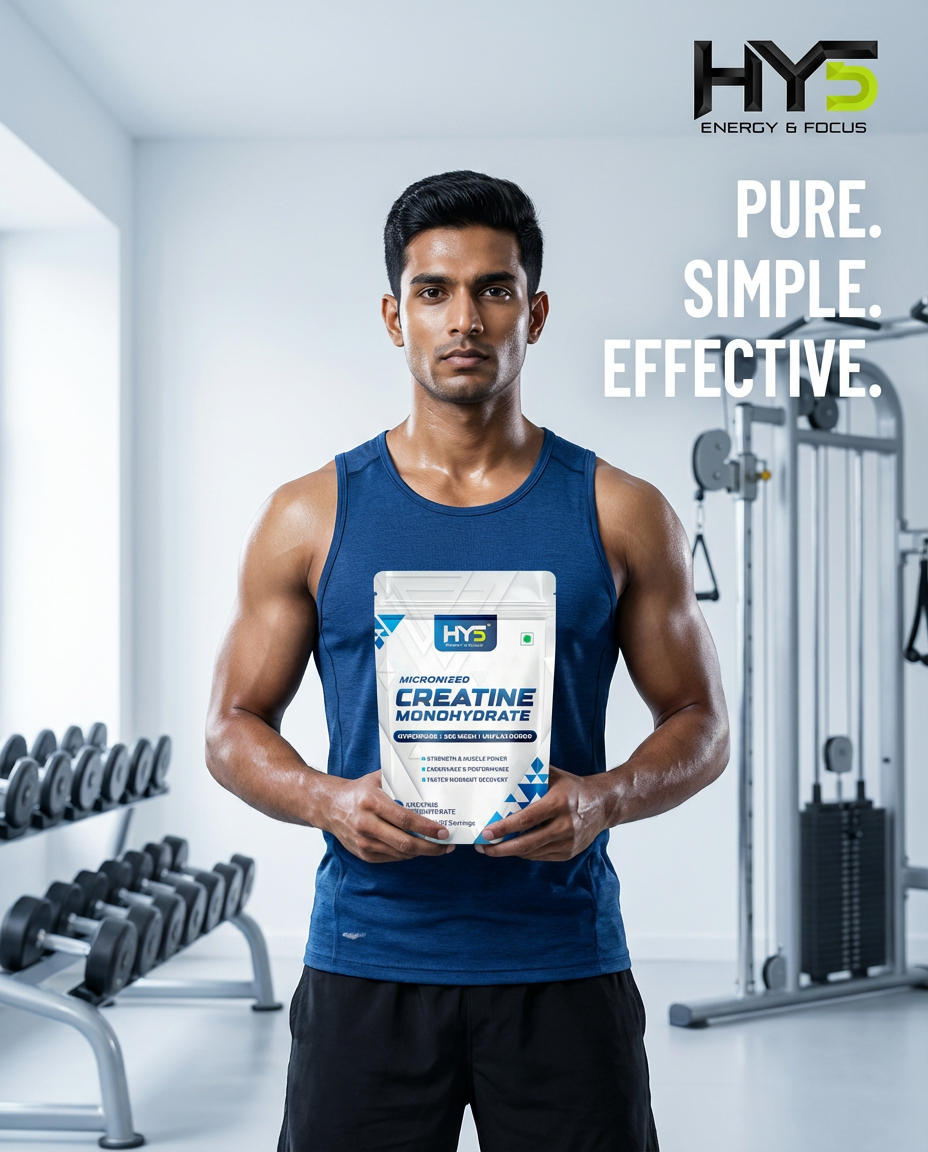
If the myths were the only thing holding you back, the evidence-backed starting point is plain micronized creatine monohydrate. HY5 Micronized Creatine Monohydrate is exactly that: 3 grams of 200-mesh creatine per serving, unflavoured, with nothing else on the label. If you want hydration support built in, HY5 Creatine + Taurine pairs creatine with L-taurine in one scoop.
Disclaimer: This article is for informational purposes only and is not intended to diagnose, treat, cure, or prevent any disease. Always consult a qualified healthcare professional before making changes to your diet, supplement routine, or wellness plan.
