






How to Build a Science-Backed Daily Supplement Stack
Introduction
Most supplement routines in India start at the point of purchase. Someone picks up a Vitamin C because it sounds useful, adds a protein powder because a friend recommended it, and considers themselves sorted. That is not a stack. That is a collection.
A proper supplement stack is built in layers. It begins with what your body is statistically most likely to be missing, then adds targeted support based on your specific lifestyle and goals. This guide is for desk workers whose energy is chronically low, gym-goers whose recovery never quite catches up with their training, and anyone who has a cabinet full of supplements and no clear idea whether they are working. As a brand formulated under FSSAI-licensed manufacturing, NutriPeak approaches stacking from the same principle: start with science, then match it to real Indian life.
You do not need ten products. You need the right three to five, used consistently, at the right times.
What a Stack Actually Is (And Is Not)
The word "stack" gets used loosely enough that it has started to lose meaning. Used correctly, it describes a deliberate combination of supplements where each element fills a distinct gap, without duplicating another.
A well-built stack has three properties. Each supplement addresses something specific: a deficiency, a system, or a goal. The supplements do not create unnecessary overlap. And they are timed correctly, because even the right supplement absorbed poorly is not fully doing its job.
The sections below build a stack from the ground up, layer by layer.
Layer One: The Foundation
This is the only layer that applies to nearly everyone. Before performance extras or recovery support, address what your body is most likely to be missing.
Vitamin D3 + K2
Vitamin D deficiency is widespread among urban Indians, and the reason is straightforward. Most adults spend the bulk of their waking hours indoors — at a desk, in transit, or at home. Even in cities with plentiful sunlight, meaningful skin exposure does not happen consistently. Surveys of Indian urban populations consistently show low 25-OH-D levels across age groups.
Vitamin D3 supports bone density, immune function, and muscle performance. The pairing with K2, specifically the MK7 form, matters because K2 helps direct calcium toward bones rather than allowing it to accumulate in soft tissue. The two work in coordination. NutriPeak's Vitamin D3+K2 uses vegan D3 sourced from lichen, making it suitable for vegetarians — a meaningful consideration given that most conventional Vitamin D3 is sourced from lanolin.
Omega-3 (EPA + DHA)
Indian diets, particularly vegetarian ones, tend to be rich in Omega-6 from refined cooking oils but very low in EPA and DHA, the forms of Omega-3 the body actually uses. The body cannot efficiently convert plant-based ALA (from flaxseed, for example) into EPA and DHA in meaningful quantities. This imbalance is associated in the research with cardiovascular, neurological, and inflammatory outcomes over time.
When choosing an Omega-3, the number that matters is not the total fish oil weight but the actual EPA and DHA per capsule. A product delivering 560mg EPA and 400mg DHA per softgel is meaningfully different from one that delivers 300mg total Omega-3 from 1000mg fish oil.
These two supplements form the non-negotiable base of any serious daily stack.

Layer Two: Cellular Defense
With the foundation in place, the next priority is supporting the body against the cumulative oxidative load of modern daily life. Pollution, irregular sleep, processed food, and sustained workplace stress all generate free radical activity that the body has to manage continuously.
Liposomal Vitamin C
Standard Vitamin C tablets absorb inconsistently, especially at higher doses. Liposomal Vitamin C uses fat-soluble encapsulation to improve bioavailability. Beyond immune support, Vitamin C is essential for collagen synthesis, supports iron absorption from plant-based sources (important for anyone eating dal and leafy greens as primary iron sources), and contributes to reducing everyday fatigue. It is a daily baseline, not a once-sick remedy.
Curcumin 95% + Piperine
Turmeric in cooking delivers curcumin in small, inconsistent amounts. A standardized extract at 95% curcuminoids is a different category entirely. Research suggests curcumin supports a healthy inflammatory response, antioxidant activity, and joint comfort with consistent use. Its main practical limitation is poor absorption.
Piperine addresses this directly. Studies suggest it can significantly increase curcumin bioavailability, which is why a 95% curcuminoid extract paired with piperine performs well above either ingredient alone.
This layer produces gradual, cumulative results. Do not expect a dramatic shift in a week — expect to feel the difference over months.
Layer Three: Performance Support
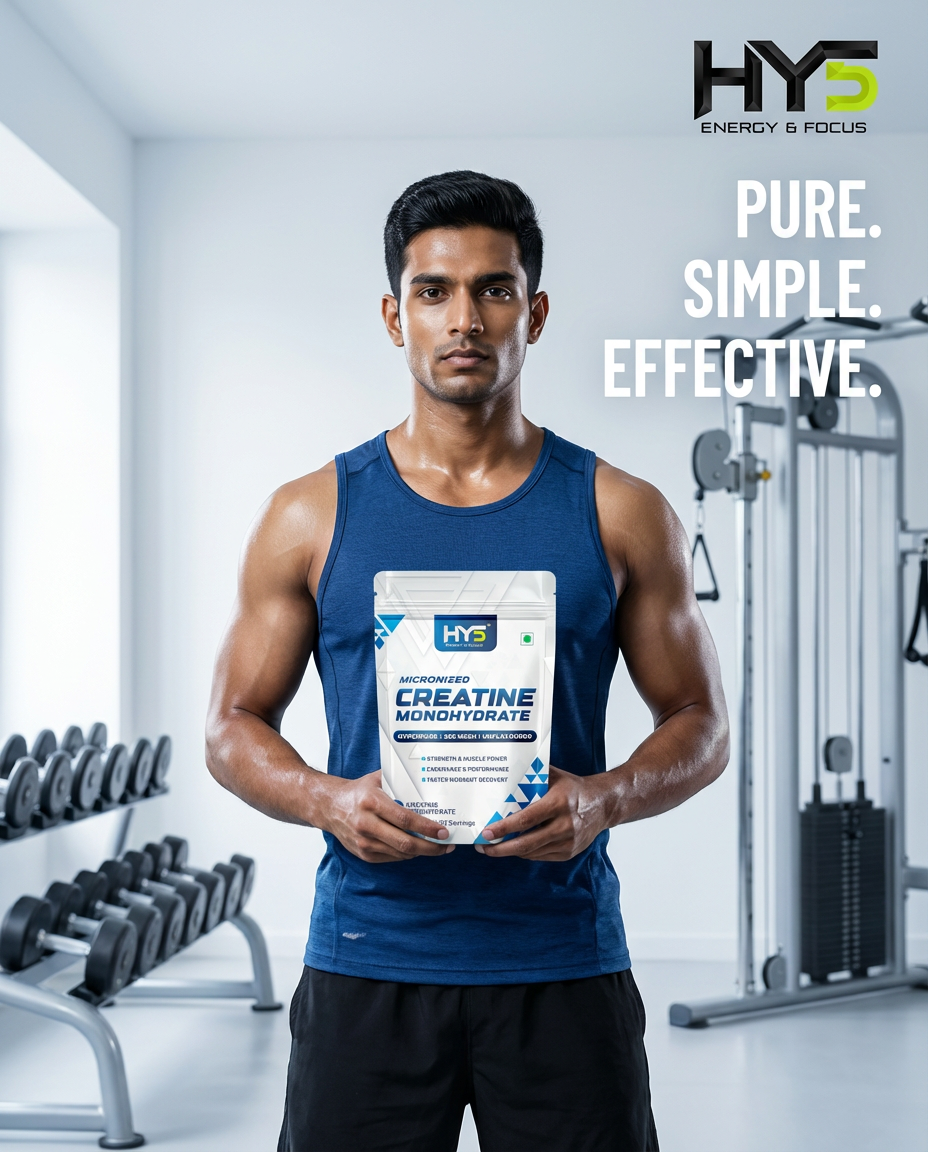
For those who train regularly, the first two layers can be extended with creatine. No sports nutrition ingredient carries a longer or better-supported research record.
Creatine monohydrate fuels the phosphocreatine system in muscles: the energy pathway used during short, intense efforts like a heavy squat set, a sprint, or a demanding circuit. Regular supplementation increases the available phosphocreatine pool, which supports better training output and faster recovery between sets.
Concerns about kidney stress or hair loss at standard doses are not supported by the weight of current evidence in healthy adults. Micronized creatine (200 mesh) dissolves well and is practical for daily use, mixed into water or a post-workout shake.
For athletes doing longer or more demanding sessions, a creatine and taurine combination may add value. Taurine supports electrolyte balance and cellular hydration during extended effort. Together, they address both energy and fluid dynamics.
One note worth making: emerging research is exploring creatine's potential relevance to cognitive fatigue, not just muscle performance. That makes it worth considering for students and professionals under heavy mental load, not just gym-goers.
Layer Four: Liver and Metabolic Support
This layer is not for everyone. That said, it deserves a clear mention.
The liver processes everything that enters the body: food, alcohol, medications, environmental toxins, and the metabolic waste generated by normal cellular activity. Urban lifestyles, irregular eating patterns, social drinking, and long-term medication use all add to its workload.
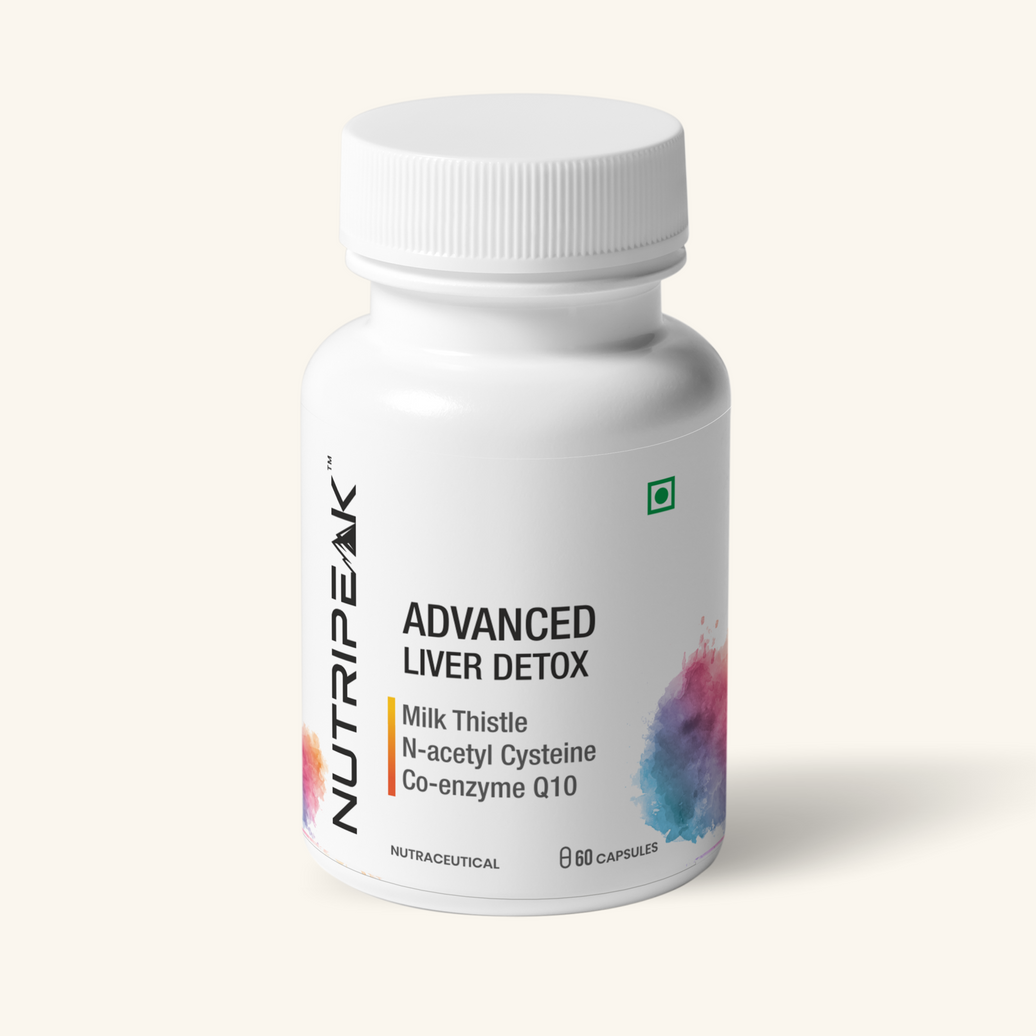
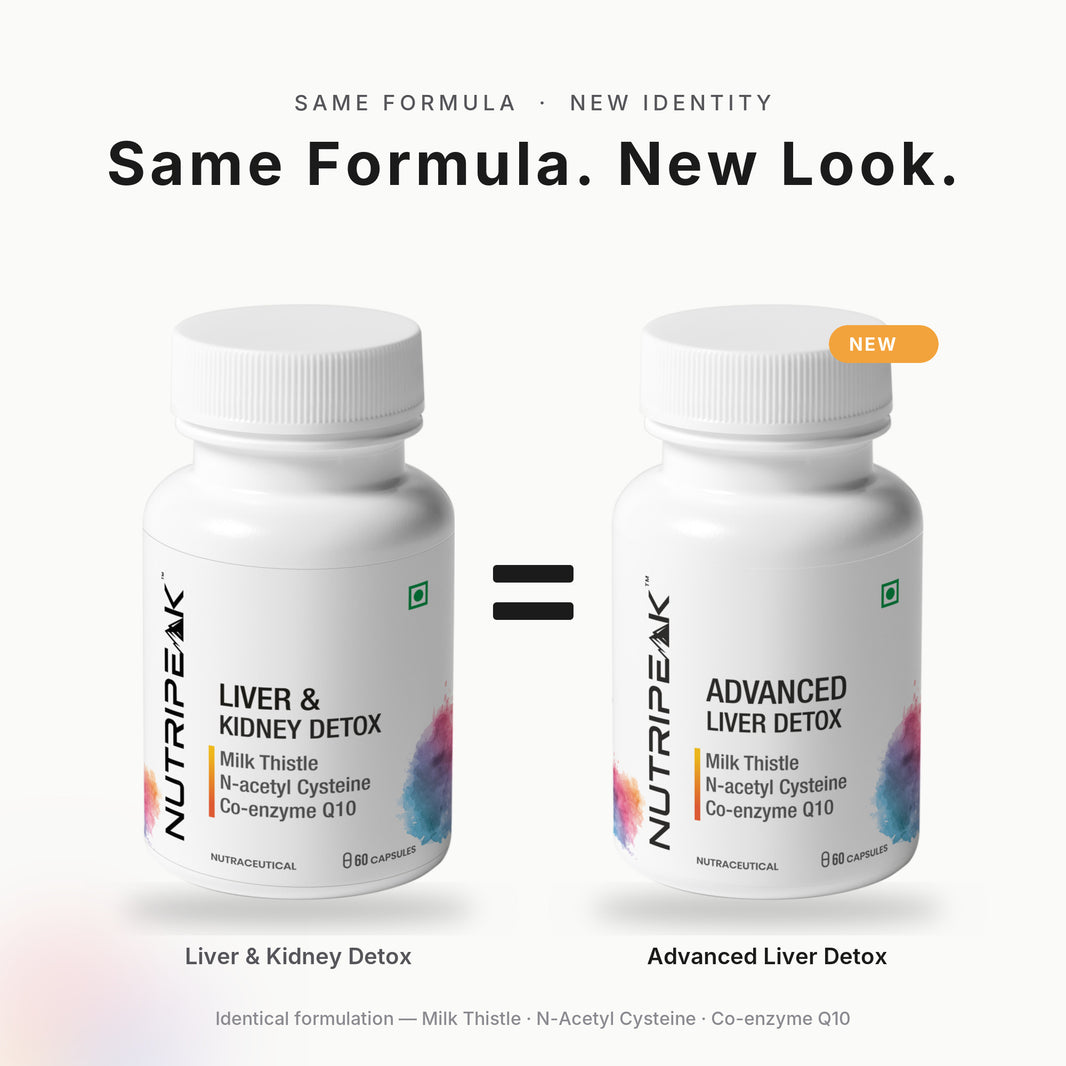
Milk thistle extract, specifically its silymarin content, has a long traditional use history in supporting liver health and is among the better-studied botanicals in this category. Combined with NAC, which supports glutathione production (the body's primary internal antioxidant), and CoQ10, which supports mitochondrial energy production, a liver support formula addresses both detox pathway function and cellular energy.

If your lifestyle is low in alcohol, well-structured in diet, and generally low-stress, this layer can wait. If it is not, it is a sensible addition. Build the first three layers before adding this one.
Mistakes That Undermine Even a Good Stack
Getting the right products is only part of the equation. Here is where good stacks quietly fail:
- Not taking fat-soluble vitamins with food. Vitamins D3, K2, and Omega-3 require dietary fat for absorption. Take them with a real meal, not a dry biscuit or plain water.
- Starting too many supplements at once. Introduce one supplement at a time, a week apart. If a reaction occurs, you will know exactly what caused it. Starting five products on the same day removes all useful information.
- Losing consistency. The benefits of Vitamin D, Omega-3, and Curcumin accumulate over weeks and months. Missing a day occasionally is fine. Stopping for three weeks and restarting is not the same as a continuous routine.
- Ignoring diet. Supplements fill gaps. Dal, eggs, curd, vegetables, and whole grains still form the actual foundation. A stack layered on top of a poor diet is far less effective than one that complements reasonable eating.
- Prioritising price over formulation. A Vitamin D3 capsule at a low dose with no K2 pairing in a low-absorption form is not a bargain. The cost per effective dose is what matters, not the sticker price.
When to Take What: A Daily Timing Reference
Morning, with breakfast:
- Vitamin D3 + K2 (fat-soluble: take with food containing some fat)
- Liposomal Vitamin C
With lunch or your largest meal:
- Omega-3 (reduces the chance of a fishy aftertaste and improves absorption)
- Curcumin 95% + Piperine (fat-soluble; a meal improves uptake)
Pre- or post-workout:
- Creatine monohydrate (daily consistency matters far more than precise timing; pre or post both work)
Evening, after dinner:
- Liver support capsules, if included in your stack
If your schedule makes splitting these across the day impractical, taking all fat-soluble supplements together at your main meal is still far better than skipping them. Do not let perfect timing become a reason for inconsistency.
Frequently Asked Questions
Q: Do I need all four layers, or can I start with just one or two?
Start with Layer One. Vitamin D3+K2 and Omega-3 address deficiencies that are genuinely common among urban Indian adults. Add Layer Two once that routine is consistent. Layers Three and Four are goal-specific and not essential for everyone. The foundation alone, done consistently, is already ahead of most people's current routines.
Q: Can I take Vitamin D3+K2, Omega-3, and Curcumin on the same day without any issue?
Yes. All three are fat-soluble and absorb best with a meal. Taking them together at lunch or dinner is practical, and they do not compete with each other for absorption.
Q: Is creatine safe to take daily over the long term?
Based on available research, creatine monohydrate is well-tolerated for healthy adults at standard doses. Those with pre-existing kidney conditions should speak to a doctor before starting. Staying well-hydrated while using creatine consistently is a sensible habit regardless.
Q: How long before a supplement stack produces noticeable changes?
Vitamin D levels in the blood typically need 8–12 weeks of consistent supplementation to shift meaningfully. Omega-3 effects on inflammatory markers take roughly 6–8 weeks. Creatine's impact on training performance can appear within 2–4 weeks of daily use. Curcumin works cumulatively over months. Patience is not optional here, and neither is consistency.
Q: Should I get a blood test before starting?
A 25-OH-D test for Vitamin D is the single most useful starting point. It is widely available at diagnostic labs across India for a few hundred rupees and tells you whether your deficiency is mild or significant. This helps calibrate your starting dose. It is not mandatory, but it is always genuinely useful information.
Q: Are these supplements suitable for vegetarians?
NutriPeak's Vitamin D3+K2 uses vegan D3 from lichen. Liposomal Vitamin C and Curcumin are plant-derived. HY5 Creatine is vegetarian-compatible. The Omega-3 is sourced from salmon fish oil and is not vegetarian. Algae-based DHA is an alternative for strict vegetarians, though EPA content varies by product and should be checked before purchasing.
Ready to Build Your Stack?
If you want a supplement routine grounded in actual nutritional science rather than marketing noise, the NutriPeak range is a practical starting point. Each product is formulated under FSSAI-licensed manufacturing, with doses calibrated to current research rather than convenience. The Vitamin D3+K2, 3X Strength Omega-3, Liposomal Vitamin C, and Curcumin 95% + Piperine cover the first two layers of any solid foundation stack. Explore the full range at nutripeak.in.
Disclaimer: This article is for informational purposes only and is not intended to diagnose, treat, cure, or prevent any disease. Always consult a qualified healthcare professional before making changes to your diet, supplement routine, or wellness plan.
